
Manual data entry
People retype the same data between two systems every day
We connect the systems directly and send a person only the cases the automation cannot read with confidence.
We map the work before choosing a model or platform. The useful target is a repeated step with clear inputs, a checkable output and a safe exit when the system is uncertain. That is the part we build first.
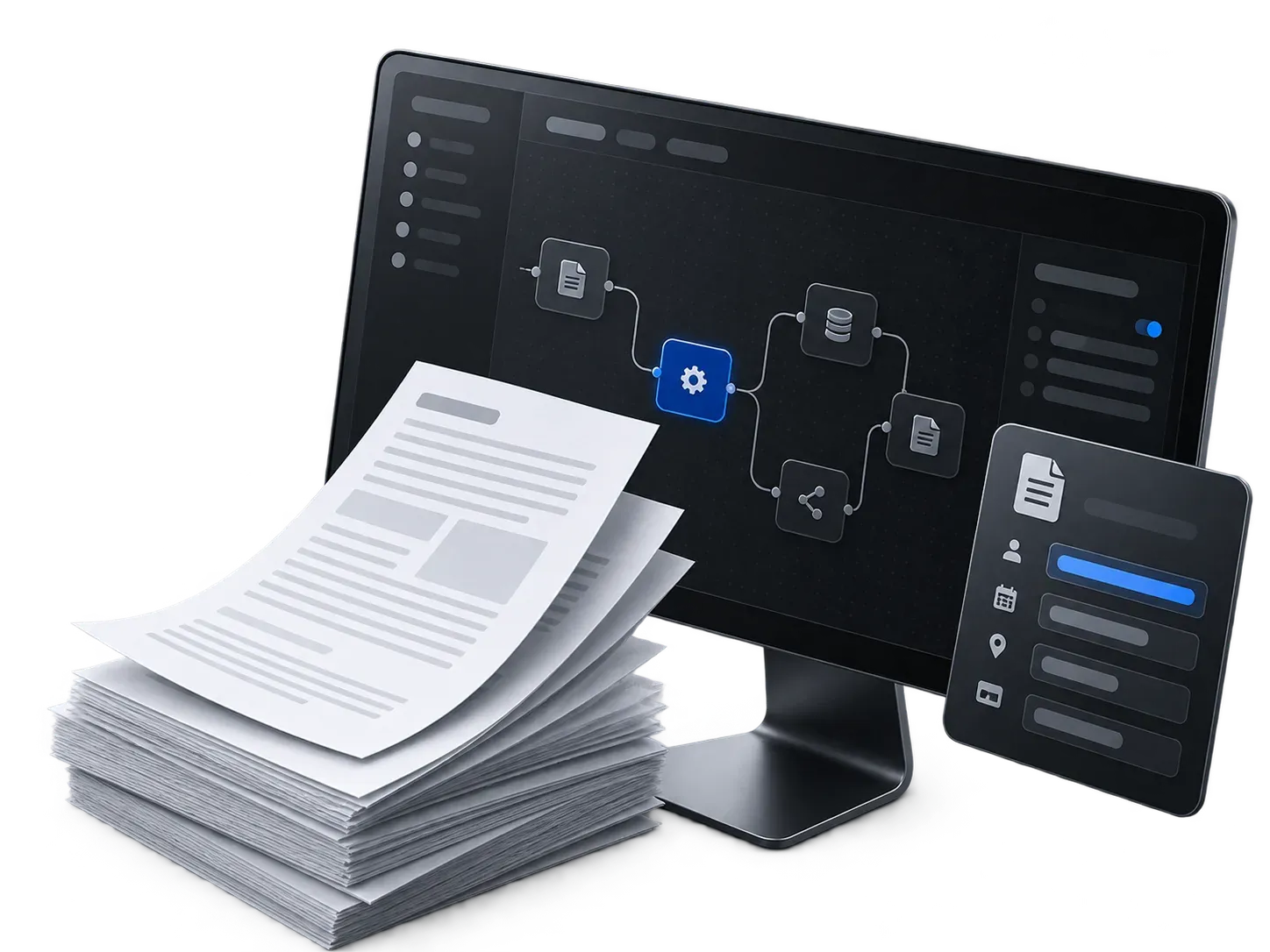
We connect the systems directly and send a person only the cases the automation cannot read with confidence.
An assistant answers from your own documents and shows the source, so the team can check the reply.
We start with a review of the work and name the one or two steps where automation is worth the cost.
Not sure which step to automate first? Start with a short process review.
Start a projectWhat is worth automating, what is not, and the reason for each.
Answers come from your knowledge base, with a link to the source.
Fields are extracted, checked and placed where your team needs them.
Data moves between tools without anyone copying it by hand.
Uncertain results go to a person instead of straight into your systems.
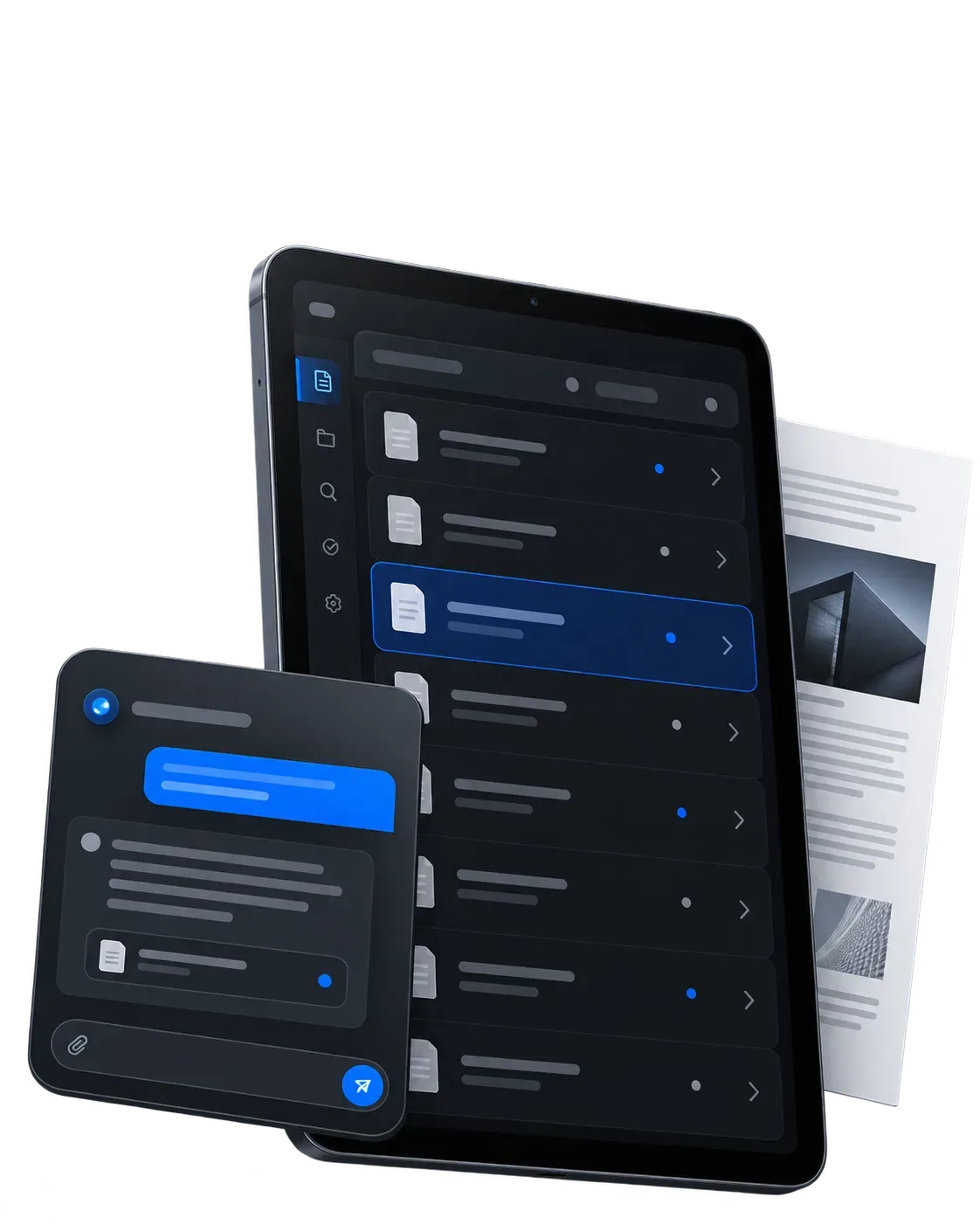
We follow the current process from input to outcome and record the repeated work, waiting time and cost of mistakes.
We choose one or two steps with a clear input, a checkable output and enough frequency to justify the change.
We build the automation together with the review queue, monitoring and fallback needed when the result is uncertain.
We compare the same workflow before and after launch, including run cost, human review and corrections.
Each step marked with what changes and what it takes off the team.
Monitoring, alerts and a manual route for when the system is unsure.
What each run costs you, so the budget is known before the volume grows.
Then a person catches it. We put review exactly where an error is expensive and let the rest run unattended.
We agree on that before the first line of code, and the answer goes in writing into the contract.
Two or three sentences are enough. We will reply with the questions needed to define a useful next step.